

Marine protected areas are increasingly recognised as critical refuges for humpback whales, offering rare stretches of ocean where they can communicate, navigate and breed without the growing pressures of shipping noise and military sonar.
Annual migrations along South Africa’s east coast have been growing for over three decades, with iSimangaliso Wetland Park recording more than 11,000 whales in a single migration season, highlighting the importance of protecting these increasingly rare quiet corridors.
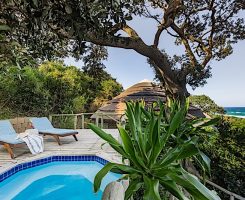
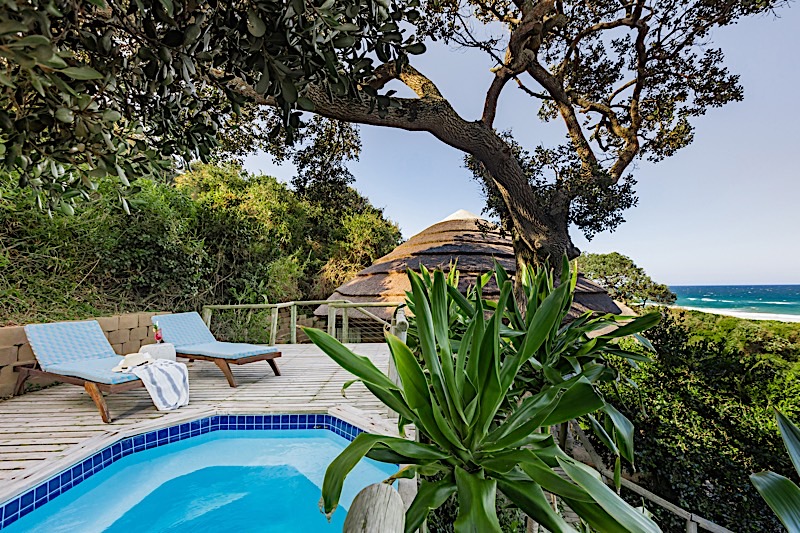
Access to this stretch of coastline is unusually limited which makes the luxurious Thonga Beach Lodge, KwaZulu-Natal, South Africa, uniquely special.
It operates the only commercial boat launch from the secluded shores of Mabibi, granting guests direct and exclusive access to this marine wilderness.

Every year between June and September, humpback whales travel the length of the African east coast on one of the longest migrations undertaken by any mammal on earth, moving from their Antarctic feeding grounds toward the warm breeding waters of Mozambique and Madagascar.
The Maputaland coast, where Thonga Beach Lodge sits is directly on that corridor, remaining one of southern Africa’s most biodiverse yet intentionally preserved marine environments.
Guests have an unobstructed line of sight from land to the open ocean, with whales passing close enough to track without binoculars.
Local guides assist with monitoring marine activity and sharing conservation knowledge that no classroom can teach.
The reef directly in front of the lodge is one of the most closely watched marine environments in the park. During winter, humpback whales dominate the migration corridor, while bottlenose and spinner dolphins, manta rays, whale sharks and giant turtles are all regular residents of these protected waters.
iSimangaliso. South Africa’s first UNESCO World Heritage Site, encompasses coral reefs, dune forests, estuaries, freshwater lakes, and open ocean.
It is also also home to the prehistoric West Indian Ocean coelacanth, a species thought to have gone extinct 66 million years ago until it was rediscovered in South Africa in 1938.
More
For more information, visit Isibindi.co.za
or contact the reservations team at +27 (0)35 474 1473.
